Planning.
Planning Applications, variations of recent approvals & Permitted Development.
When the proposed work falls outside the rules for permitted development then planning permission must be obtained. Planning permission allows for the development of land and existing properties it is usually granted by the local planning authority, which is part of the local council. A planning application involves the production of scale drawings of the existing property and of the proposed development. It also involves various forms and certificates covering the detail of the work, environmental issues and other matters. Following submission of the application there may be modifications required by the planning officer prior to a recommendation being made by the planning officer to the planning committee. At this stage the application will be rejected, accepted or accepted with planning conditions.These conditions are very important and must not be breached.
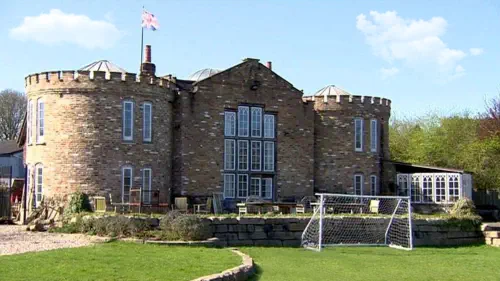
Once consent has been achieved it lasts for a number of years – usually 3 – and runs with the land or property, not with the individual. Many people know about Robert Fidler, a farmer from Salfords in Surrey, who built a four-bedroom mock-Tudor castle on his land, Honeycrock Farm, without obtaining the necessary planning permission. The Levelling-up and Regeneration Act 2023 extended the enforcement period from 4 years to 10 years for all breaches of planning control, including operational development and changes of use to a single dwellinghouse. After which it is deemed that planning is effectively automatically granted. To avoid detection, Fidler initially concealed the castle behind a wall of hay bales. The local council, Reigate and Banstead Borough Council, eventually discovered the structure in 2007 and ordered its demolition, as it was built on greenbelt land without permission. After a decade of legal battles, the High Court gave Fidler a three-month suspended sentence and ordered the demolition of the castle by June 6, 2016. The courts decided that because he had ‘intentionally’ hidden the structure, he had deceived the planners and it was therefore not covered by the 10 year rule.
GET IN TOUCH
40 Deepdale Lane, Lower Gornal, South Staffordshire DY3 2AE - 07967 778808
Web by | APK
Planning approval made easy!
Planning.
Planning Applications, variations of recent approvals &
Permitted Development.
When the proposed work falls outside the rules for permitted development then planning permission must be obtained. Planning permission allows for the development of land and existing properties it is usually granted by the local planning authority, which is part of the local council. A planning application involves the production of scale drawings of the existing property and of the proposed development. It also involves various forms and certificates covering the detail of the work, environmental issues and other matters. Following submission of the application there may be modifications required by the planning officer prior to a recommendation being made by the planning officer to the planning committee. At this stage the application will be rejected, accepted or accepted with planning conditions.These conditions are very important and must not be
breached.
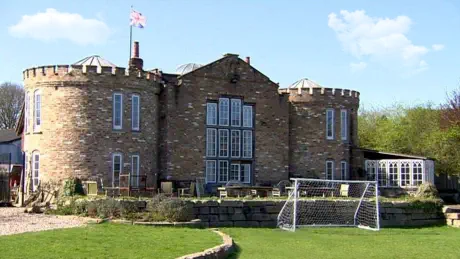
Once consent has been achieved it lasts for a number of years – usually 3 – and runs with the land or property, not with the individual. Many people know about Robert Fidler, a farmer from Salfords in Surrey, who built a four-bedroom mock-Tudor castle on his land, Honeycrock Farm, without obtaining the necessary planning permission. The Levelling-up and Regeneration Act 2023 extended the enforcement period from 4 years to 10 years for all breaches of planning control, including operational development and changes of use to a single dwellinghouse. After which it is deemed that planning is effectively automatically granted. To avoid detection, Fidler initially concealed the castle behind a wall of hay bales. The local council, Reigate and Banstead Borough Council, eventually discovered the structure in 2007 and ordered its demolition, as it was built on greenbelt land without permission. After a decade of legal battles, the High Court gave Fidler a three-month suspended sentence and ordered the demolition of the castle by June 6, 2016. The courts decided that because he had ‘intentionally’ hidden the structure, he had deceived the planners and it was therefore not covered by the 10 year rule.
GET IN TOUCH
40 Deepdale Lane, Lower Gornal, South Staffordshire DY3 2AE - 07967 778808
Web by | APK
Planning approval made easy!
PlansforPlanning

